Best Water Purifier For You
Check out the best water purifiers based on your needs & water quality.
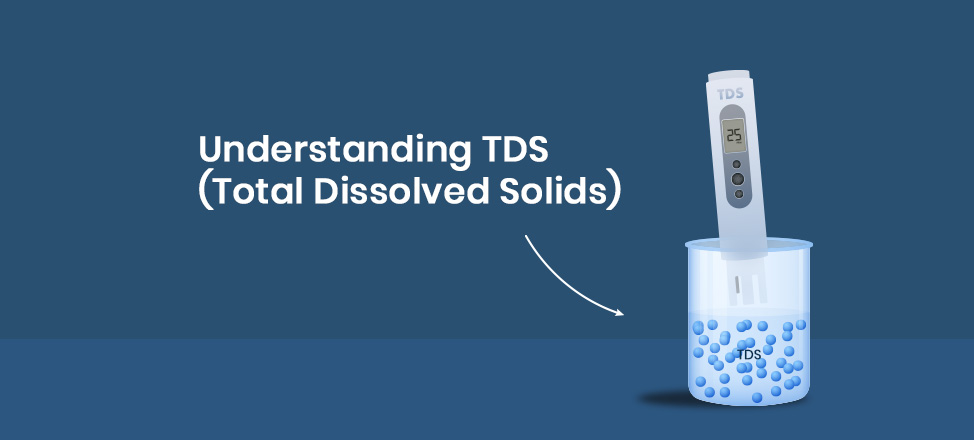
Understanding TDS (Total Dissolved Solids)
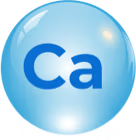
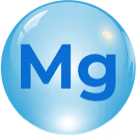
TDS stands for Total Dissolved Solids — it's a measure of all the inorganic salts and small amounts of organic matter dissolved in water. It includes minerals like:

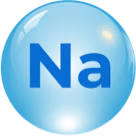
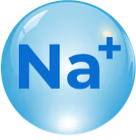
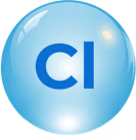
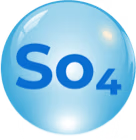
TDS is measured in mg per liter (mg/L) or parts per million (ppm) (1 mg/L = 1 ppm)
Why TDS Matters

Taste & palatability:
Water with very low TDS can taste flat; water with high TDS may become slightly salty, metallic, or unpalatable.

Mineral content:
Some dissolved minerals (e.g. calcium, magnesium) are beneficial to health in moderate amounts.

Scale & deposits:
High TDS often contributes to scaling in pipes, kettles, appliances, which can reduce their life and efficiency.

Indicator of impurities:
TDS is a bulk indicator — though it does not tell which contaminants are present, a higher TDS often signals the presence of unwanted salts, heavy metals, or dissolved ions.
Do you know?

WHO perspective
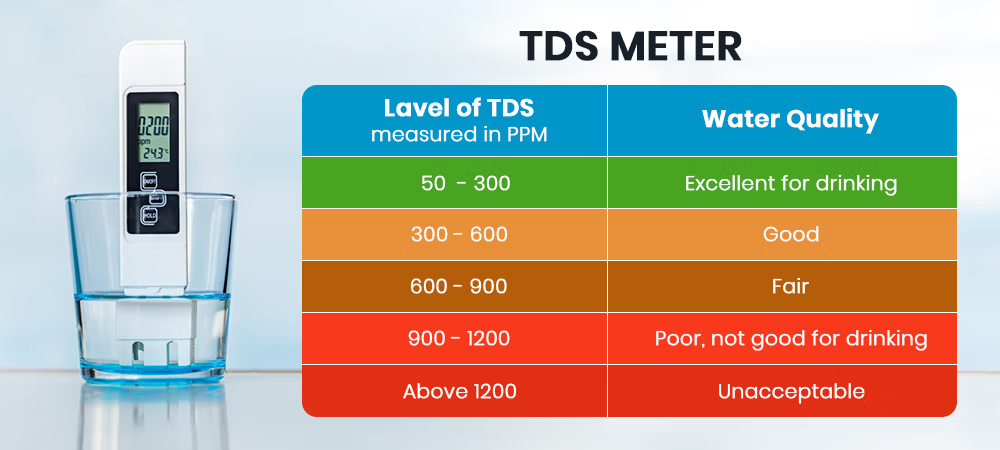
The WHO does not define a strict health-based limit for TDS, but states that palatability becomes compromised beyond about 600 mg/L, and water with less than ~300 mg/L is often rated as “excellent” by taste panels.

Indian / BIS (IS 10500:2012)
In India, Bureau of Indian Standards (BIS) recommends that TDS up to 500 mg/L is acceptable drinking water quality. In exceptional cases, up to 2000 mg/L is permissible if no alternate source is available.
According to ISO 10500
2012, the desirable limit is 500 mg/L; beyond that, water may become less acceptable in taste. In many Indian contexts, water with TDS beyond 500 may be considered “hard” or “poor quality” for drinking.
Typical Ranges & What They Mean